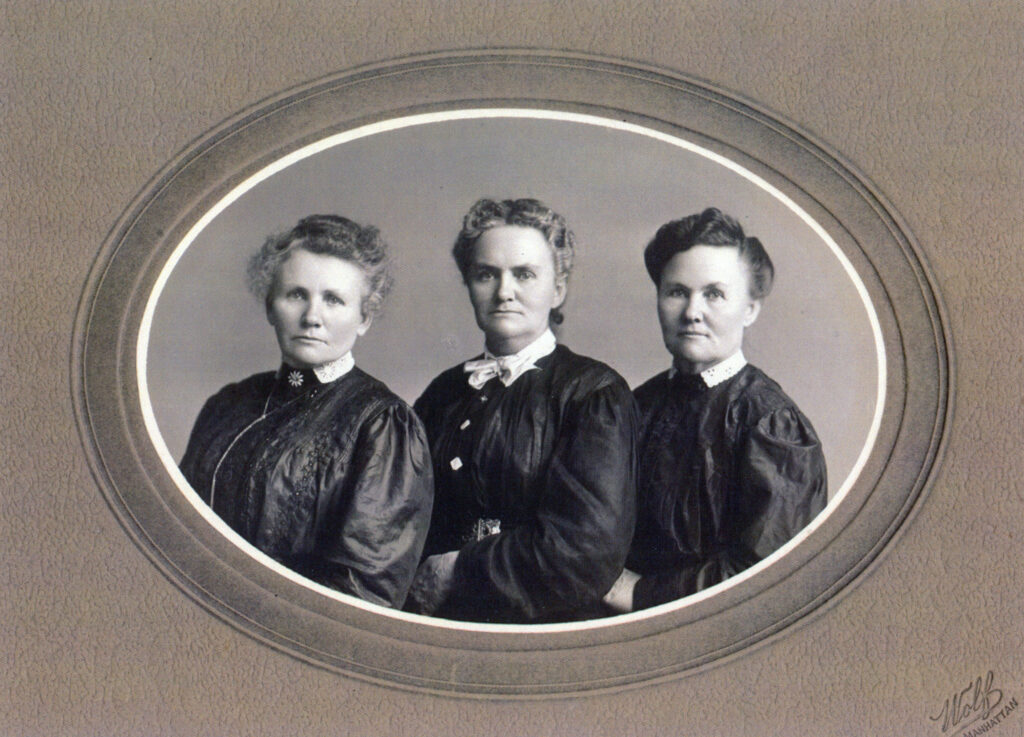
Joseph Alexander McIntire and Susan Strawn
This next portion of the website I like to think of as the “Great Grand Years” because these are the ancestors that became our beloved Great Grandparents, Great Uncles and Aunts. Their children went on to become our Grandparents, Grand Uncles and Grand Aunts. These dear ones are part of the MacIntyre Journey I’ve looked most forward to telling and vicariously reliving because their stories are my most treasured history and memory. Since my birth year was 1949, I never met any of the “Great Grands as they were part of the generation before me. But many of their stories were brought to memory by the dear “Grands” that were part of my early years. Their names were affectionately said, usually in terms like “my grand-dad used to say”, or “father and mother would tell us”, little mentions that kept them present and remembered. Family meals were inadvertent celebrations of those gone before through recipes and dishes from a long ago time. A table was set with linens, dishes, and surrounded by furniture that once belonged to them. In Nellie and Ira Clark’s home a crank telephone hung on the wall, Martin McIntire’s rocking chair nearby and a black walnut cupboard, originally in the home of Lucinda LaRue Anderson, still used by Nellie. Frances Meyer McIntire’s rolls (my grandmother) were a reflection of her childhood years of learning to bake in her mother’s kitchen. Canned fruits and pickles brought up from an earthen cellar, freshly picked garden corn and tomatoes, all savored and celebrated the Greats and Grands gone before. Those are precious and cherished memories I will always hold dear to my heart.
Joseph was quite an accomplished musician, as were his siblings! For a number of years he held singing schools throughout Fremont county and assisted concerts with a well known local photographer Henry H. Stich who was also a musician. As noted in the above biography he had a sweet and clear tenor voice and active in local music engagements. “Professor J.A. McIntire” would organize “Singing Schools” which were becoming quite popular in the nineteenth century especially in small communities. They were usually lead by a music teacher or master who would guide the class in rudimentary music reading and singing in simple harmony. The use of tune books with scales and etudes, and sacred tunes. Music reading might also include a new type of notation called “shape notes”, which used four distinctive note-head shapes to correspond with scale tones mi-fa-sol-la. Eventually the method was refined and became more popular. There is a modern ‘shape note’ artist and workshop teacher that might be of interest. His name is Tim Eriksen and his website can be found here:
https://timeriksenmusic.com/timsolo
He is an ethnomusicologist with a focus on shape note music in New England and in particular the Sacred Harp four part harmony tradition. Tim Eriksen’s style is likely not what Joseph taught but the concept of teaching a method of learning music in a fun and simple way!
The Children of Joseph and Susan
Joseph and Susan began their life together on September 20 1877 in Kirkville, Iowa. Their first child, perhaps a daughter, was born in 1878 however she did not survive. A son, Walter Ray was born in 1880 followed by a daughter named Bertha. in 1882 and another daughter in 1883.
Walter Ray
Walter grew up in Sidney and finished his schooling at Sidney High School. Soon after his graduation he moved with the family to Bellingham, Washington where he is listed on the 1915 Polk City Directory living at the same address with his wife named “Anna”. The address was 2331 Henry in Bellingham and is the same home that Joseph and Susan lived. The photo below is a modern image of the home, however I do not know if or how much of the exterior was changed since the family was inhabiting the home.
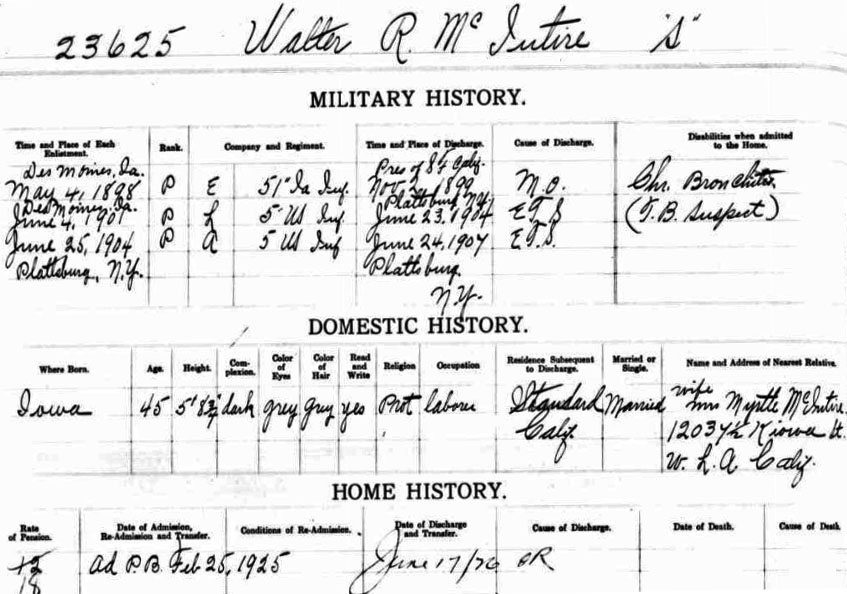
According to the Fremont County “Pieces of the Biographical Puzzle” message board, #214, March 14, 2006, Walter McIntire was attending the encampment at Red Oak of the 51st Iowa (The Fremont County Herald of Aug. 9, 1900). He was a volunteer in the Spanish American War from 1898 to 1902 and then listed in the schedule below for health concerns. He apparently was married at this time to a woman named Myrtle (Reid?) but the 1950 United States Census shows him married to a woman named Victoria (Worley). It’s possible that Myrtle and Anna are the same person however no evidence to support that.
Joseph McIntire, son of Alexander and Mariah Lovina

Joseph was an unfamiliar Great Uncle until a decade ago while embarking on a family heritage scrapbook project. This entry from “History of Fremont and Mills County, Iowa” was a great discovery and a wonderful introduction into this amazing “Great” of our family. Joseph is the eldest child of Alexander and Mariah Lovina McIntire, born in Keokuk, Iowa on August 21, 1848.
The efficient postmaster at Sidney, who in the discharge of his duties has manifested a most business-like spirit, is Joseph A. McIntire, who was born in Keokuk county, Iowa, August 25, 1848. His father, Alexander McIntire, was a native of Fairfield county, Ohio, whence he removed to Indiana and subsequently to Iowa, locating in this state in its territorial days. He married Lovina Hiatt, who was born about twelve miles from Indianapolis, Indiana, in 1826. Their wedding was celebrated in 1846, and their marriage was blessed with six children, of whom four sons and a daughter reached mature years, namely: Joseph A.; Martin L., a farmer who resides in Marion county, Iowa; Harvey, a resident farmer of Brooks county, Kansas; Malon L., who also resides in that county and possesses considerable musical talent, being the author of a number of musical compositions of note; and Olive M., the wife of Dayton Greeson, who resides at Pleasant Plain, Jefferson county, Iowa. All are married and have families. The father died in April, 1855, at the age of thirty-one years. The mother remained a widow for many years and died in Brooks county, Kansas, July 9, 1900, when nearly seventy-four years of age.
Joseph A. McIntire pursued a two-years course of study in the Central University of Iowa, and engaged in teaching at the age of twenty-one. He successfully followed that profession for many years, being an instructor in vocal and instrumental music, giving lessons on the piano. He possesses a remarkably sweet and clear tenor voice and has been the leader of many choirs. His services are always in demand at local entertainments and he has done much to promote the musical taste and culture of the town in which he resides.
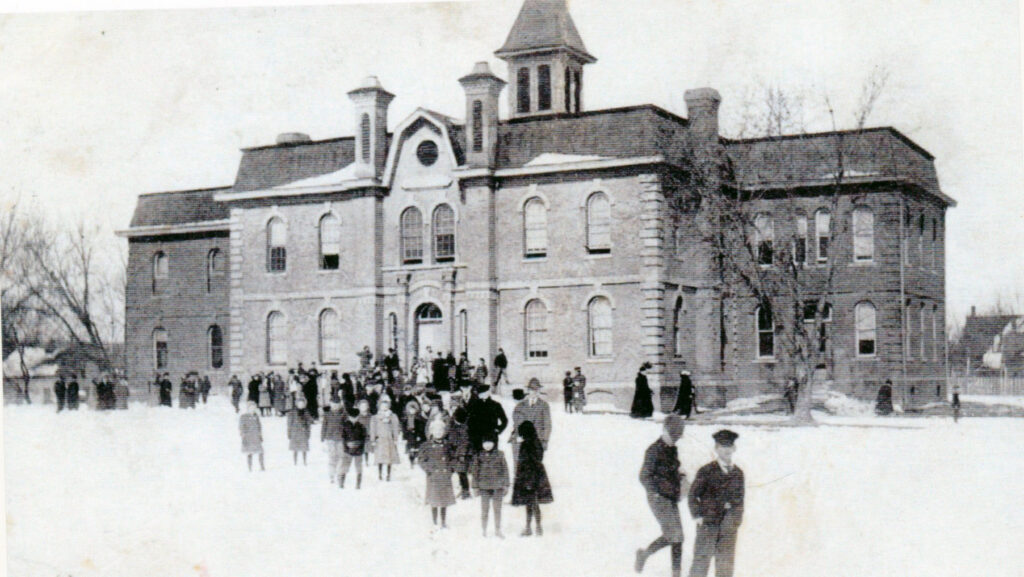
In the fall of 1878 Mr. McIntire was united in marriage to Miss Susan A. Strawn, of Kirkville, Iowa, a daughter of Nelson and Elizabeth (Rhodes) Strawn, all of Ohio. Four children were born unto them, but eldest, a daughter, died in infancy and Bertha died at the age of nine years. Walter Ray was graduated in the high school in Sidney, and in 1900 matriculated in Grinnell College in Grinnell, Iowa. He served in Company E., of the Fifty-first Iowa Infantry, in the Philippines, for more than a year and participated in fifteen engagements. He made an excellent record as a soldier and is a good student, being particularly proficient in mathematics. Elsie May, the youngest of the family, is now a young lady of fifteen years, attending the schools of Sidney.
In his political views Mr. McIntire is a stalwart Republican, unswerving in his support of the principles of the party. For two years he served as the postmaster of Sidney, under President Harrison, and since July, 1897, he has been the postmaster under President McKinley’s administration. He is a very efficient, faithful and accommodating officer, always found at his post of duty and even those of different political belief comment him for his fidelity and trustworthiness in office. For eleven years he has made his home in Sidney, at his present place of residence. Holding membership in the Baptist church, he has served as one of its deacons. He has also served as the leader of the choir for a number of years and takes an active part in church work. As a citizen he is public spirited and progressive.
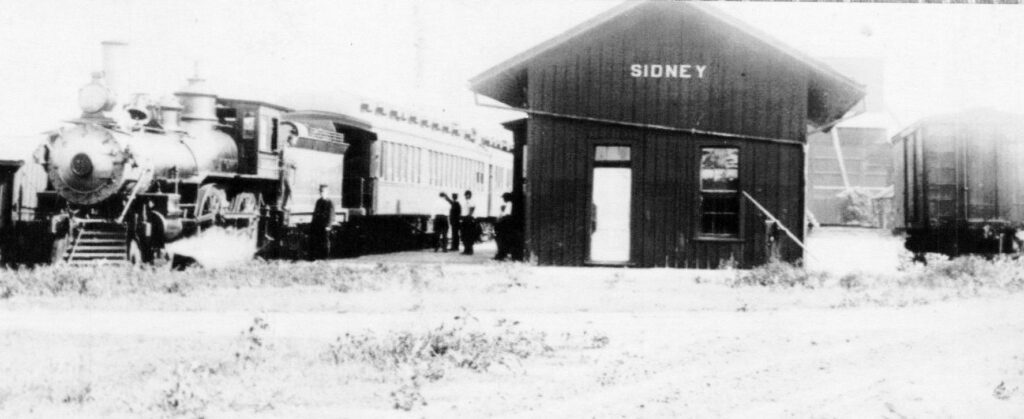
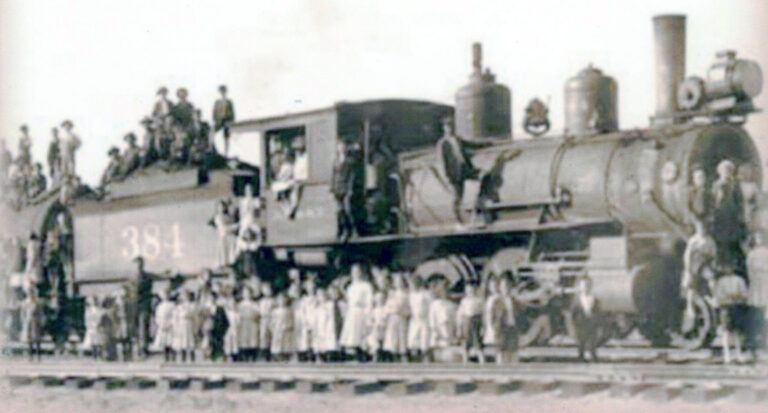
In 1904, a trainload of orphan children took a rest stop on the Atchison, Topeka and Santa Fe Railroad. The orphan train arrived in Sidney in 1904 with nine children being adopted by Fremont County families. For more information on the Orphan Train project in Iowa follow this link https://iagenweb.org/iaorphans
The following article was published in the Fremont County Herald on September 27, 1904:
“Last Thursday evening seventeen orphan children were brought to Sidney from the state of New York and work of finding them homes in suitable families is going on. Friday morning a meeting was held at the Methodist Church. The church was crowded with people anxious to see the children. The little ones were placed up in front where all could see them. They are all bright, intelligent appearing children and some of them are beautiful singers. It is indeed a sad sight to witness when the children begin to be separated. Some of them have been together some little time and have formed ties of friendship. But these children are fortunate to be taken into such good homes. Those who have been placed are perhaps better off then many children who have parents. There are a number of children who have not been placed. The management is very careful where the children go and because of reasons known to themselves have refused a number who would have taken children. If they cannot be disposed of here satisfactorily, they will be taken to the northern part of Iowa”.
Bertha
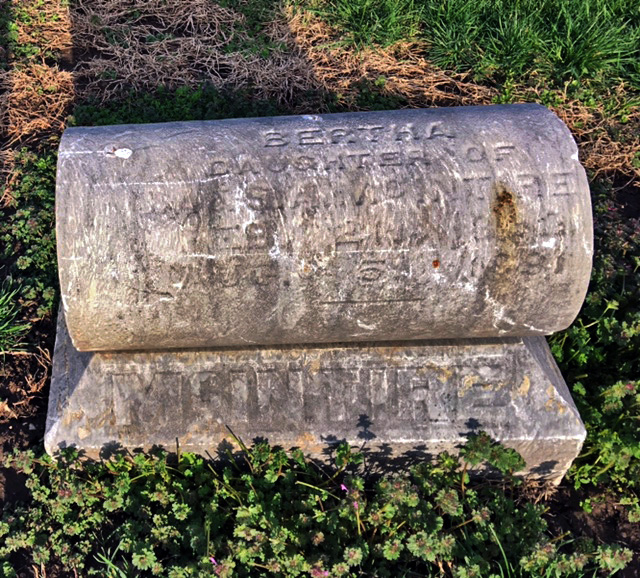
I am always saddened by the death of our younger ancestors, especially when they are on the cusp of their lives. I do not know how Bertha passed away, but she was not quite 10 years of age and likely a student at one of the schools in Sidney. Such a sad day for our family. She is buried in the Sidney Cemetery and her headstone is below.
Rest peacefully my dear little cousin.
Elsie May
Elsie May was born just a few months shy of two years after her sister Bertha, and 7 years of age when her sister passed away. Her loss must have been devastating. The family moved away from Sidney when Elsie was still in school. In a 1902 school census roster, her parents name is listed as part of the school registration count in Whatcom County, Bellingham, Washington. Elsie is shown as being 18 years old in 1902.
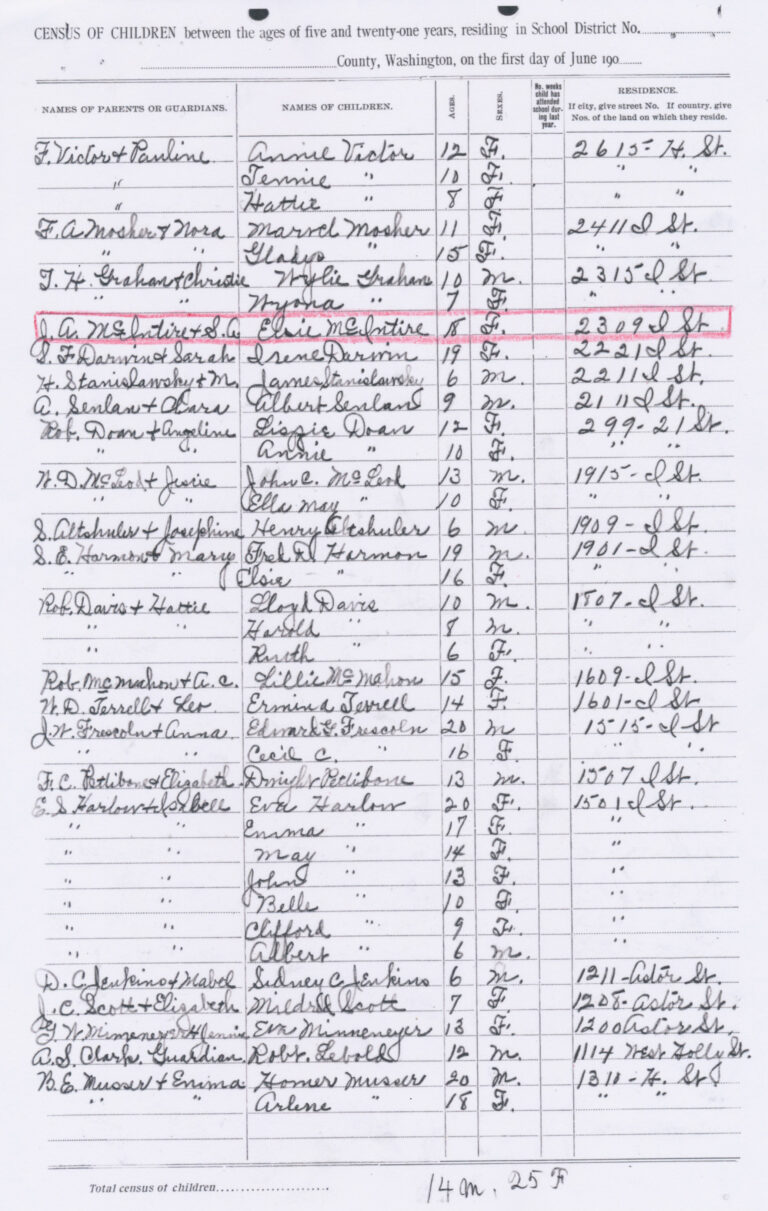
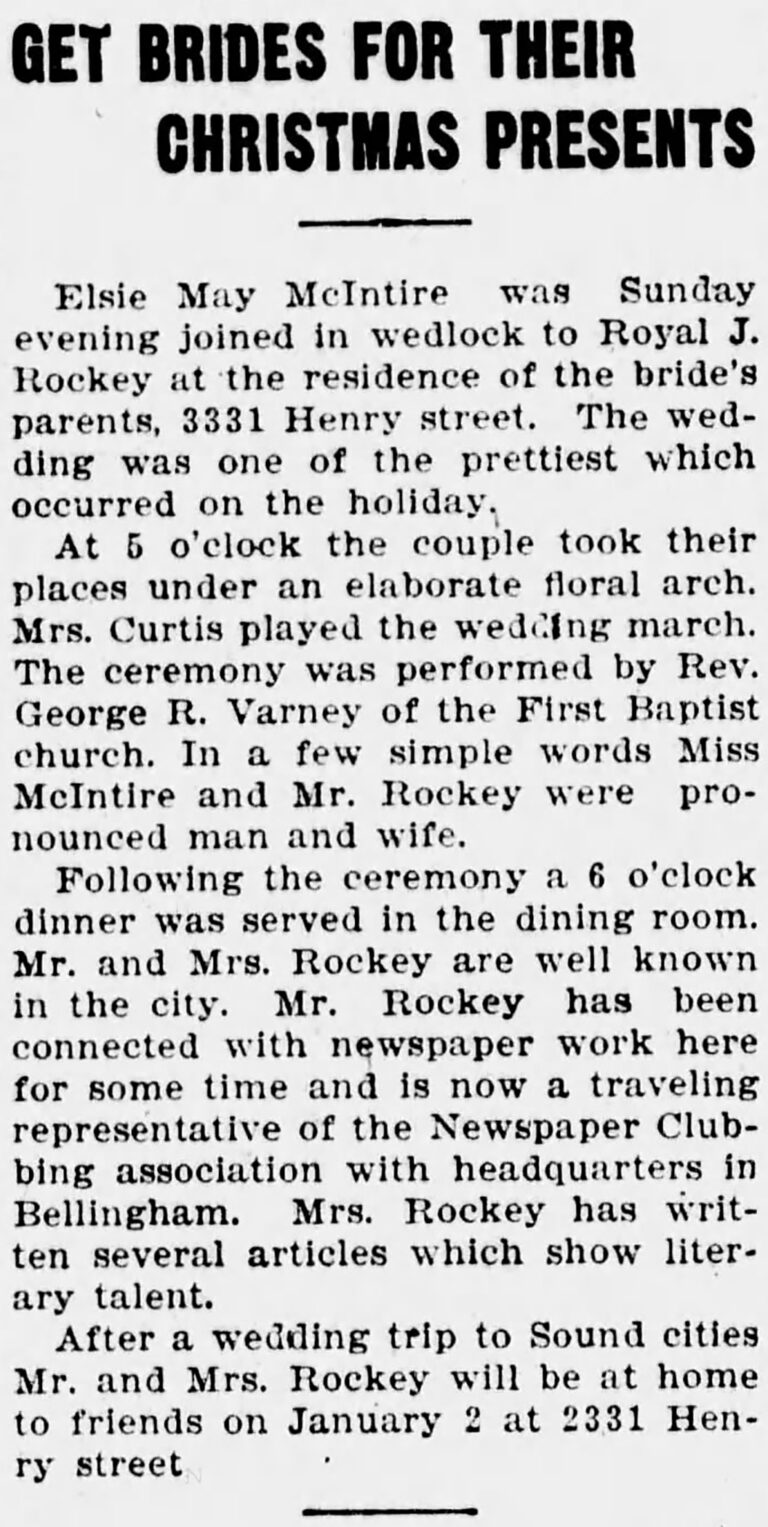
Within a few short years Elsie met and married Royal James Rockey, the son of a well known family in the community. The following clipping was published in the Bellingham Herald announcing the wedding held a few days prior.
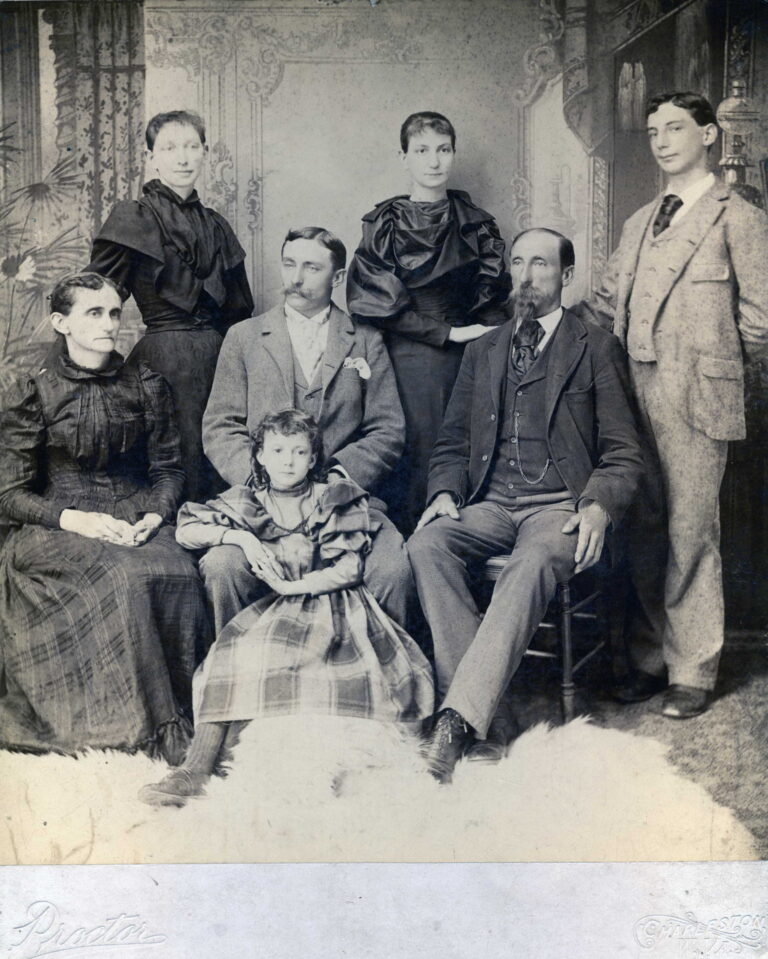
Just as the McIntire and Rockey families were enjoying the beautiful northwest, health issues became the biggest challenge. Both Susan and her daughter Elsie had suffered with kidney disease throughout their lives. “Bright’s” disease as it was known, is a devastating nephrological condition. Dialysis was at least 30, perhaps 40 years in the future so little could be done other than limit sodium and other foods that might cause facial and extremity swelling. Since it’s the job of the kidneys to filter and cleanse the body of impurities, when that function is not doing as it should, a person can feel poorly in quick order.
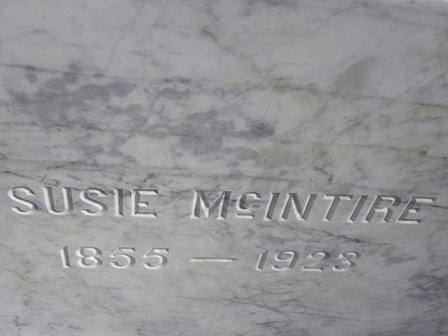
In June of 1923, Elsie’s mother Susan passed away of the disease, followed in quick succession, Elsie also in October. I can’t help but wonder if this horrible disease might have been what Bertha suffered with. Susan was interred in the Bayview Cemetery Mausoleum in Bellingham, Washington as was Joseph after his passing in 1932. Elsie was cremated and her ashes spread in an unknown location.