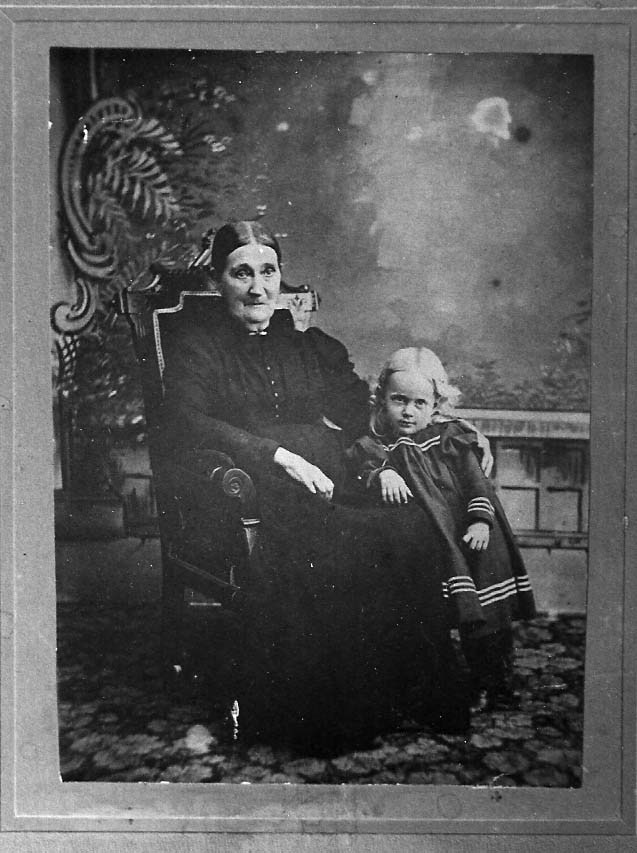
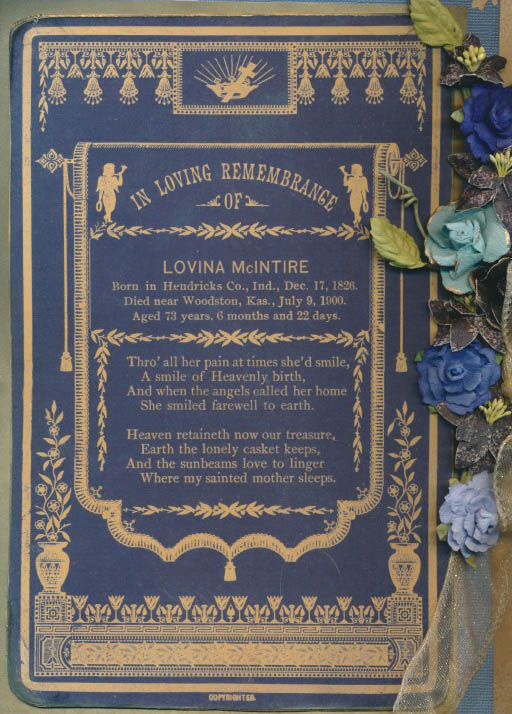
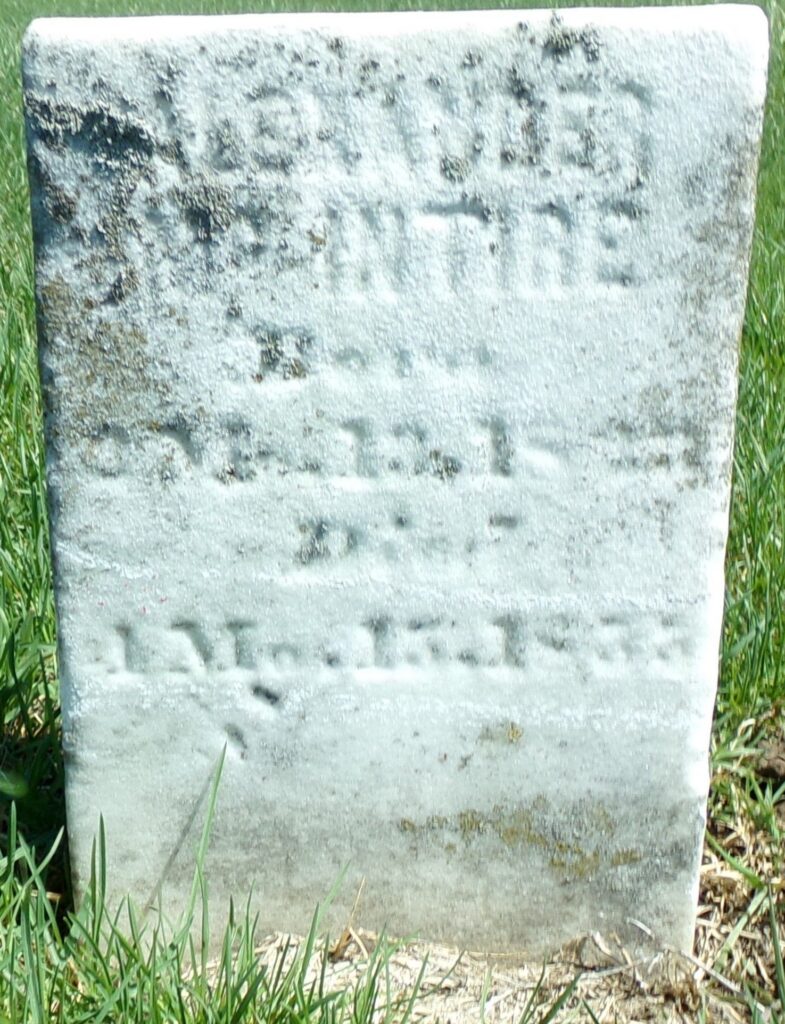
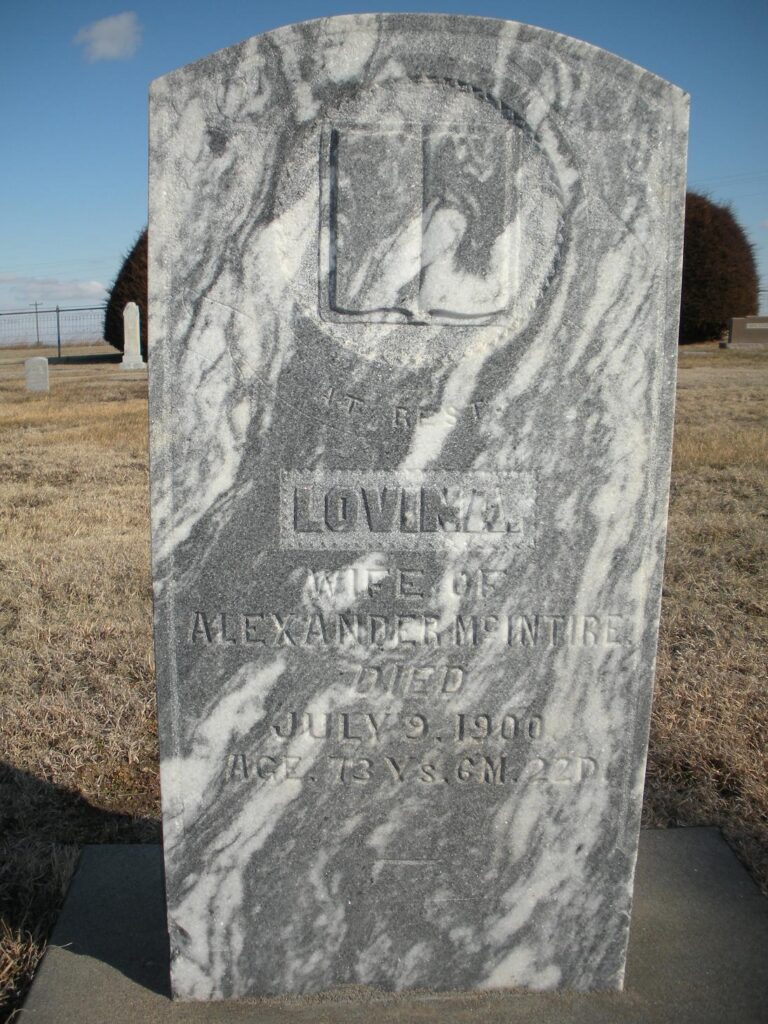
Alexander McIntyre and Lovina Mariah Hiatt
Alexander was my second Great Grandfather, bearing a closer link to the great aunts and uncles I knew as a child. A few years back, a cousin sent me a narrative from his ancestry work to leave for his kids and grandkids, which ironically is why I am writing this website! This gem was filed away and rediscovered with delight! Thank you Elliot McIntire for your wonderful addition to our legacy!! Alexander is also Elliot’s second great grandfather, and our great grandfathers, Martin and Harvey were brothers and sons to Alexander and Mariah! He clarified that “the following contents cannot be verified or some may be inaccurate as is usually the case with oral information” having been passed through the generations. As my Grandma Frances McIntire used to say, “it’s a good story and I want to hear it again”!
A Narrative of Remembrances Passed through the Generations
by Elliot McIntire Second Great Grandson to Andrew and Mariah
At about age eighteen, Andrew and Sally’s fourth child, Alexander, left home and moved into the newly settled territory of Iowa. When Alexander arrived in Iowa, settlement had only just begun. Keokuk County was created by the Territorial Legislature in February 1843, separating it from Washington County. Although a few had moved in earlier, most of the county was only opened to settlement on May 1, 1843, following signing of a treaty with Chief Keokuk of the Sac and Fox tribe. However the eastern part of the county, where Alexander settled, had attracted settlers a few years earlier, many of them from Indiana. Aaron Miller arrived in the spring of 1838 and was followed by William Searcy, Cyrus Jordan, Jacob Weiner and others. Several settled near what became Sigourney, the county seat, in 1843, and a sawmill was built near the junction of the South and North Skunk rivers in 1843 by L.B. Hughes.
In the spring of 1839, “quite a colony” of settlers arrived to the Richland area of Keokuk county from Indiana. They arrived too late in the year to raise crops, and in the following winter much of their stock died, and diets were often limited to corn bread and meat. The river lands were settled first, but within a few years the fertile prairie lands of the uplands was preferred, which avoided the problem of clearing the land of trees before crops could be planted.
Following survey, public lands were sold to private individuals. However, under provisions of the Preemption Act of 1841, squatters who had lived on the land for 14 months could purchase up to 160 acres at $1.25 per acre. This act was largely superseded by the Homestead Act of 1862, which provided freehold title for 160 acres.
According to my father, Marcus McIntire, one day in 1844, when Alexander was twenty-one, he was sitting on a rail fence with some other young men, observing a covered wagon that was moving into the neighborhood. There was a seventeen year old girl driving the loose cattle behind the wagon. My grandfather turned to the other young men and stated that “I am going to marry that girl someday”. She was Mariah Lovina Hiatt. They married two years later in 1846. Originally from near Kings Mountain, North Carolina, the family moved to Iowa from Indiana, where Mariah had been born. Apparently her father died soon after their marriage, and her mother Hannah, born in North Carolina was living with Alexander and Mariah at the time of the 1850 census. In 1880,, both Hannah and Mariah were living with Mariah’s daughter Olive and her husband Dayton Greeson in Belmont, Warren County, Iowa. Hannah died April 3, 1883, at age 96.
Alexander either purchased public land from the government or obtained title under the Preemption Act, but in any case, on the first of March, 1850 he received title to forty acres, described as the southeast quarter of the southwest quarter of Section 36, Township 74 North, Range 10 West, located about two miles south-southwest of the town of Richland, Iowa, in southeastern Keokuk County. Eventually he also owned land in Section 13 and Section 27 of the township. This part of the county where Alexander settled is in the drainage of the Skunk River.
“The north and south forks of Skunk River which unite in the eastern part of the county, and their numerous small tributaries, drain the remainder. The descent from the watershed to the valleys of these streams is abrupt, rendering the face of the country quite rolling, except along the margin of the rivers, which are skirted by broad, level valleys. Timber borders the principal streams in considerable quantities, but is limited to occasional groves on the uplands. The county has, therefore, considerable variety in its surface features. It has an excellent soil, derived from the very deep deposit of drift and well adapted to the production of corn and nearly all the small grains, grass, fruits and vegetables. Stock raising has proved very remunerative, as the county possesses all the requisite advantages for success in this branch of business. Frequent and good water power is afforded by both branches of Skunk River and in its banks are exposures of good limestone for ordinary uses. The county lies about equally in the sub-carboniferous section of Iowa and the region of the coal fields. Several good coal mines have been opened, but as the sub-carboniferous limestone frequently comes to the surface along Skunk River, and so coal exists only between this and the drift, its presence is chiefly limited to the south part of the county. The drift contains an abundance of excellent clay for the manufacture of brick”.
From “A Short History of Keokuk County, Iowa” by A.T. Andreas’ Illustrated Historical Atlas of the State of Iowa, 1875. (This book is in my personal library and is listed in the Bibliography of this website).
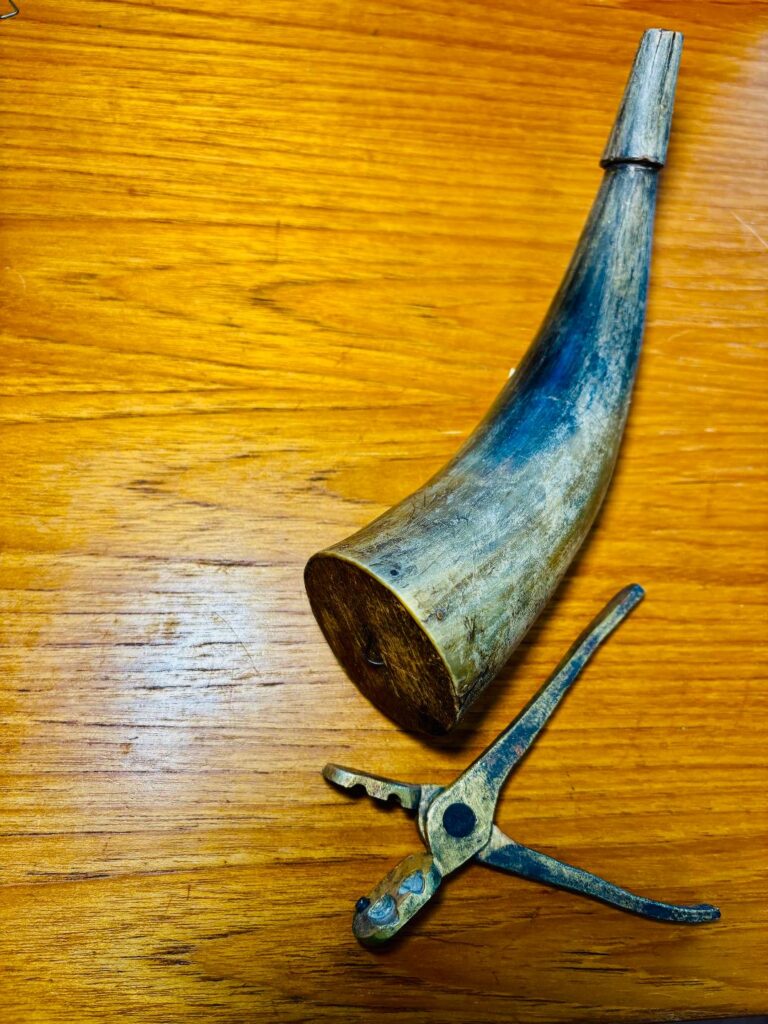

Alexander and Mariah (or Lovina as she is also called) had six children, however the first child, a girl, born in 1847 died in infancy. Joseph Alexander was born in 1848 followed by my great grandfather, Martin Luther, born in 1850. Harvey Derbyshire was born in 1851 with Mahlon Lewis soon after in 1852. The final child born was a daughter, Olive Mariah born in 1854. More on these dear ones in future publications!
Continuing on with Elliot’s narration, unfortunately, Alexander was able to enjoy his new home for on a short time. He died on April 15, 1855, at the age of thirty-two, probably of a ruptured appendix, leaving behind a young widow with five children, ranging from seven down to an eleven month old daughter. Mariah never remarried, but struggled to raise her five children, and died in Woodston, Kansas on July 9, 1900 at about the age of seventy five. She had been raised a Quaker, but when she married Alexander, who was outside the church, she was kicked out of the church, and her own brothers, who lived in the same neighborhood, were not much help to her. Alexander’s brother Mahlon and another brother were of much more help to the widow and her large family.
“My mother had to become the breadwinner and the responsibility of rearing into good citizenship the five children. I can recall in memory the hard struggle she went through with getting us up to the age that we would be of any help to her. She did all the work in the house and also the outside work.
As soon as we were old enough to work, it was necessary that we hire out to help our mother support the family. I was but eleven years of age when I hired to work for a farmer for $3.50 a month. That was the first year of the Civil War in 1861. I can return in memory many of the exciting times that happened in that year and on up through the entire war.
Like most of the boys at the age we were we were very fond of sports. I can recall many of the Saturday evenings when we came home from our work our mother would stop her work in the house and watch us boys with our sports. Running foot races, turning handsprings, somersaults backwards and forwards, walking on our hands until a late hour”.
From a letter to the editor of the Express (probably Olathe or Montrose, Colorado)
by Martin Luther McIntire